Team members

Godefroid de Callataÿ
Professor of Arabic and Islamic Studies at the Oriental Institute of the University of Louvain
Godefroid de Callataÿ is Professor of Arabic and Islamic Studies at the Oriental Institute of the University of Louvain (UCLouvain). He has specialized in the history of science and philosophy of the Islamicate world, with particular interest in medieval Arabic encyclopedism, Ismailism, and the corpus known as Rasā’il Ikhwān al-Ṣafā’ (‘Epistles of the Brethren of Purity’). Before MOSAIC, he has led two major research projects: ARC “Speculum Arabicum” (Objectifying the contribution of the Arab-Muslim world to the history of sciences and ideas: the sources and resources of medieval encyclopaedism), UCLouvain, 2012-2017); ERC Advanced “PhilAnd” (The origin and early development of philosophy in tenth-century al-Andalus: the impact of ill-defined materials and channels of transmission), UCLouvain / Warburg Institute (2017-2024).
As part of MOSAIC project (for which he serves as corresponding PI), he will be mainly concerned with conjunctional astrology, the classifications of science, and the impact of the Brethren of Purity over the ages.
Matteo Martelli
Professor of the History of Science at the University of Bologna
Matteo Martelli is Professor of the History of Science at the University of Bologna, where he teaches the history of ancient science and technology as well as the history of ancient medicine. His research focuses on Graeco-Roman and Byzantine science—particularly alchemy and medicine (pharmacology)—and its reception within the Syro-Arabic tradition. After working on projects on Greek and Byzantine medicine in Berlin, he served as principal investigator of the ERC project AlchemEast (Alchemy in the Making: From Ancient Babylonia via Graeco-Roman Egypt into the Byzantine, Syriac, and Arabic Traditions).
As part of the MOSAIC project, he will concentrate on the occult sciences in Byzantine and Syriac traditions, with special attention to alchemy and the experimental reconstruction of alchemical practices in modern laboratories. He is currently preparing a critical edition and translation of the alchemical works of Zosimus of Panopolis as preserved in the Syriac tradition.
Petra G. Schmidl
Historian of science specialising in pre-modern astronomy and astrology, prognostication, and instrumentation in Islamicate societies
Petra G. Schmidl is a historian of science specialising in pre-modern astronomy and astrology, prognostication, and instrumentation in Islamicate societies. After studying history, history of science, anthropology, and physics, she received her doctoral degree from the Johann Wolfgang Goethe-Universität Frankfurt in 2005 with a dissertation on folk astronomical treatises from 11th-century Hijaz and 13th-century Yemen.
Her work examines procedures, methods, and instruments employed in astronomical, astrological, and prognostic practices that help people in orienting themselves in everyday life, with particular emphasis on Rasūlid Yemen (13th-15th century) and the scholarly engagement of their sultans, as explored in her project “The Sultan and the Stars” (tabsira.hypotheses.org/). Building on this research and adopting a comparative perspective Petra G. Schmidl examines interdependencies between these scholarly traditions, rulership and religion. She also explores the subject matter assigned to the history of science in general and the role of prognostication and instrumentation in it, the movement of knowledge among different cultures and languages, and its presentation in manuscripts and on instruments, notably the astrolabe.

Matthew Melvin-Koushki
Associate Professor of Islamic History at the University of South Carolina
Matthew Melvin-Koushki (PhD Yale) is Associate Professor of Islamic History at the University of South Carolina. He specializes in early modern Islamicate intellectual and imperial history, with a philological focus on the theory and practice of the occult sciences in Timurid-Safavid Iran and the broader Persianate world to the nineteenth century, and a disciplinary focus on history of science, history of philosophy and history of the book through the lens of the Islamic Weird.
As part of MOSAIC, he produces and supervises editions, translations and studies of major Persian encyclopedias of the sciences and Arabo-Persian manuals of lettrism and geomancy. Soul of Islamic Pythagoreanism, these computing technologies did much to drive the mathematization of the cosmos across the vast early modern Afro-Eurasian ecumene, leading in turn to our own Cosmo-Imperial Algorithmic moment.
Fatma Sinem Eryilmaz
Distinguished researcher at Universitat Autònoma de Barcelona
Fatma Sinem Eryilmaz (PhD Chicago) is a distinguished researcher at Universitat Autònoma de Barcelona and the Research Partner of the ERC Synergy Project, MOSAIC. Trained as an Ottoman historian with a particular interest in the Mediterranean and Iran, she has focused on political, cultural, and intellectual history privileging the use of literary and visual sources. She has worked on Ottoman dynastic literature and textual and visual representation of sovereignty especially during the reign of Sultan Süleyman (1520-1566). Her recent research has shifted towards understanding the intellectual networks in Ottomanizing Anatolia during the late medieval and early modern period.
As part of the MOSAIC team, she is to continue following the steps of the intellectuals who use the name of the tenth century encyclopedic society Ikhwān al-Ṣafā’ (Brethren of Purity) in Anatolia. Her focus falls primarily on studying the transmission of knowledge, classifications of science, and the use of the occult in cultivating royal authority between 1300-1700 C.E.
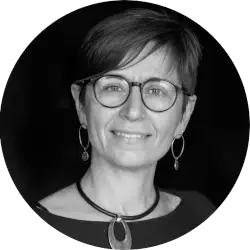
Lucia Maini
Professor of General and Inorganic Chemistry at the University of Bologna
Lucia Maini is Professor of General and Inorganic Chemistry at the University of Bologna. Her research spans diverse areas within Crystal Engineering, with a focus on polymorphs, co-crystals, coordination polymers and organic material and mechanochemistry. She has a strong background in solid state characterization, structure solution from single crystal and powder X-ray diffraction.
As part of the MOSAIC project, she will design and oversee the experimental study of alchemical practices described in pre-modern manuals — ranging from Byzantine compendia and recipe books to Arabic, Persian, and Ottoman treatises. She will assist the team in identifying the chemical realities underlying these procedures and, when possible, in reconstructing them in modern laboratories.
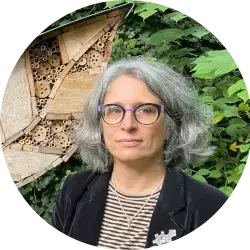
Marta Galloni
Associate Professor of Systematic Botany at the University of Bologna
Marta Galloni is Associate Professor of Systematic Botany at the University of Bologna. Her research focuses on plant diversity and conservation, with a special emphasis on reproductive strategies and ecological relationships with pollinators, within the current context of profound, human-driven global change. In recent years, her work has also expanded to include citizen science and, more broadly, public engagement. She teaches different botany courses across various master’s degree programs, approaching the subject from biological, conservationist, and cultural perspectives.
As part of the MOSAIC project, she will supervise the study of botanical elements described in pre-modern manuals of alchemy and related sciences, ranging from astro-botany to medicine. Her research will help the team identify the plants, plant structures, and compounds mentioned in the texts, examine their properties and characteristics, and, where possible, test their uses and properties in modern laboratories.
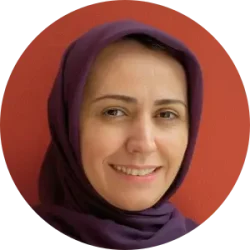
Razieh S. Mousavi
Postdoctoral Researcher
Razieh S. Mousavi holds a BSc in Mathematics and an MA in the History of Science from the University of Tehran. She earned her PhD in 2023 from Humboldt University of Berlin, where her doctoral research was supported by the Max Planck Institute for the History of Science. Her dissertation examined al-Farghānī’s Elements of Astronomy, a ninth-century Arabic treatise, analysing its scientific content alongside its literary dimensions.
Her research focuses on the practice and transmission of pre-modern astral and mathematical knowledge beyond scholarly circles. Through postdoctoral positions in Berlin and Venice, she has also explored seasonal knowledge and the environmental history of Islamic societies. At the intersection of these interests, her current project investigates historical traditions of weather forecasting in the Islamicate world. More broadly, her work addresses the relationship between religion and science within Islamic intellectual history.
She is currently a postdoctoral researcher with the ERC Synergy Grant MOSAIC: Mapping Occult Sciences Across Islamicate Cultures, based at FAU Erlangen–Nürnberg, Faculty of Humanities, Social Sciences, and Theology. She is also a visiting postdoctoral fellow at the Max Planck Institute for the History of Science, where she contributes to the working group “Heavens in Your Hand: Artifacts and Astral Practices in Eurasia and North Africa (4000 BCE–1700 CE).”
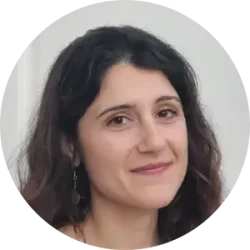
Dominique Sirgy
Postdoctoral Researcher
Dominique Sirgy (PhD, Islamic Studies and Ancient Christianity, Yale University) is a postdoctoral fellow with the Mapping Occult Sciences in Islamic Cultures (MOSAIC). Her subproject on the MOSAIC research team is to create critical editions and translations from the sixteenth-century Persian encyclopedia Gardens of the Righteous (Riyāż al-abrār) by Ḥusayn ʿAqīlī Rustamdārī. Alongside this work, Dominique is producing an analytical commentary of the text as well as several articles founded in her work with the Gardens of the Righteous.
At present, she is researching an article on the function of Rustamdārī’s encyclopedia as a propaganda machine for imagining a Safavid imperial utopia through the integration, universalization, or marginalization of non-Islamic and non-Persianate sources of knowledge. Her other projects explore medieval and early modern manuscript anthologies in Arabic, Persian, Syriac, and Hebrew as windows onto the history of reading and writing cultures of the Near East, especially with regard to the knowledge and practice of therapeutic treatments outside of formal institutional contexts in the Safavid era, and to the religious discourses underpinning the pursuit and practice of occult scientific knowledge among diverse communities of faith in the premodern Near East.
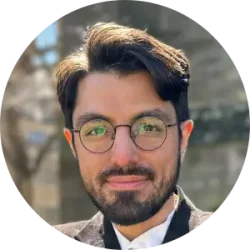
Ahmed Tahir Nur
Postdoctoral Researcher
Ahmed Tahir Nur’s scholarship traces conceptions and transmissions of knowledge and authority across the Asian and Mediterranean Worlds. His dissertation (Yale, 2025) seeks to refocus plural epistemological perspectives in Islam by studying the changing configurations of knowledge in late medieval and early modern Islamicate cultures with particular emphasis on the Ottoman scholar Taşköprizade’s (d. 968/1561) encyclopedia of the sciences.
His publications include peer-reviewed book chapters on the classification of the sciences and practical philosophy of Taşköprizade, the critical edition and analysis of a sixteenth-century Arabic plague treatise by the Spanish physician Ilyas ibn Ibrahim, the English translation of Mu‘tazilite texts as well as the latest Turkish research on Taşköprizade. Prior to the ERC Synergy project MOSAIC, Nur’s research was supported by Andrew Mellon Foundation, European Commission, Scientific and Technological Research Council of Turkey, Yale Macmillan Center, Beinecke Library, and Princeton Firestone Library.
His research project at Universitat Autònoma de Barcelona as part of the MOSAIC will study and situate Taşköprizade’s contribution to the classifications of the sciences within Ottoman and Islamicate scholarly cultures, enhancing our understanding of different scientific strands in the global history of knowledge.
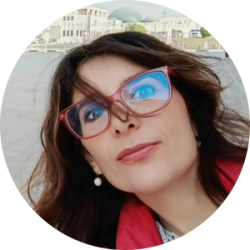
Laura Tribuzio
Senior Researcher of History of Sciences, focusing on Arabic and Persian intellectual traditions
Laura Tribuzio is a Senior Researcher on the ERC Synergy Project MOSAIC at the Université Catholique de Louvain. She previously held a fellowship on the ERC Project PhilAnd (Warburg Institute / UCLouvain) and earned her PhD in the History of Sciences, focusing on Arabic and Persian intellectual traditions. Her research explores the role of the occult sciences in the organization of knowledge across the Islamicate world, especially the intersections of cosmology, esoteric doctrines, and prophetic authority in encyclopaedic writing. Within MOSAIC, she studies the Persian reception of the Rasāʾil Ikhwān al-Ṣafāʾ through the Mujmal al-ḥikma (13th c.), tracing how it reshapes the encyclopaedic model of knowledge and authority. Her work also examines music as a mathematical and cosmological science in Arabic, Persian, and Judeo-Arabic corpora, highlighting its link with number, harmony, and the occult arts.
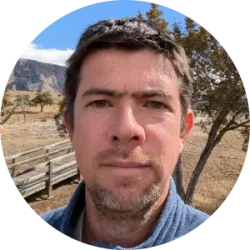
Rémy Baranx
Software Engineer
Rémy Baranx is a Software engineer. After working for almost fifteen years as embedded software engineer for several companies in France and Belgium he joined UCLouvain and PhilAnd to develop a set of tools to collect and link together various types of data useful for the project and to make them easily searchable for scholars.
He joined the Mosaic project to work on developing various applications to facilitate the visualization and use of project data.